Do you do Lithomex repairs?
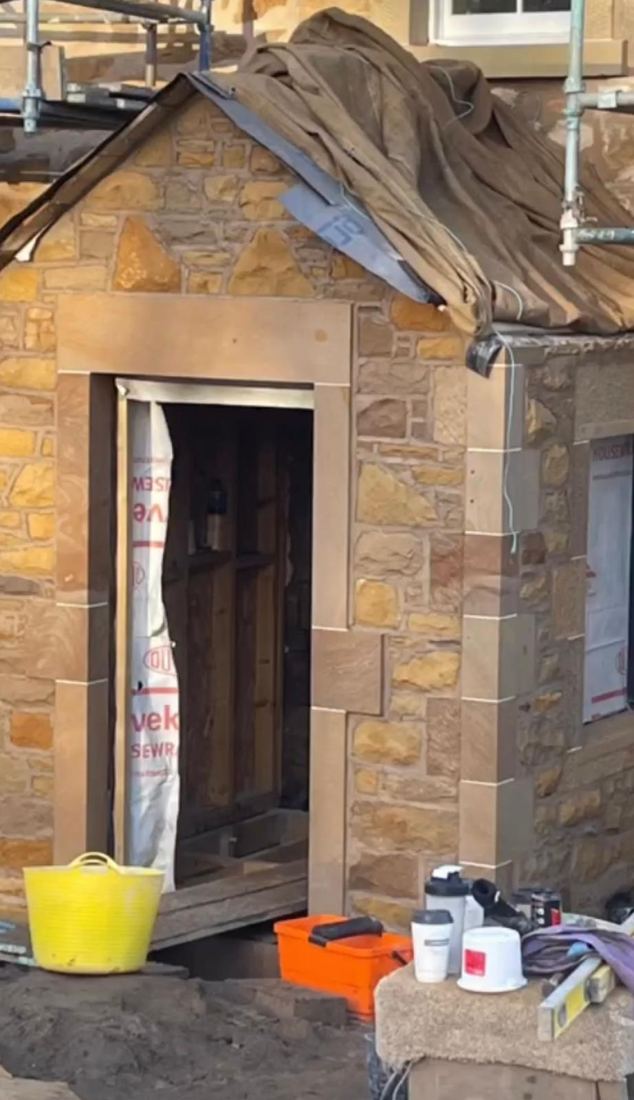
Yes. Where the decay is shallow and the stone behind is sound, we build the face back up in Lithomex, a lime-based stone repair mortar, coloured and worked to match the sandstone around it. It saves cutting out stone that does not need to come out, and we advise honestly which repair suits the wall.
What is a stone indent?
An indent is where the decayed part of a stone is cut out and a new piece of matching stone is let in, rather than replacing the whole block. It keeps as much of the original as possible and is standard practice on sandstone repair.
Do I have to replace the whole stone?
Usually not. If the back and bed of the stone are sound, we cut out only the failed face or edge and indent new stone into it. Full replacement is only needed where a block has decayed right through.
How long do sandstone indents last?
A well-cut indent, bedded and pointed correctly in the right mortar, lasts as long as the surrounding stone. It weathers in over a few seasons and becomes part of the wall.
Can you match a carved cill or head?
Yes. Where a moulded cill, head or string course has decayed, we cut the new stone to the same profile so the line carries through unbroken.